

| Area: 86,500 Acres | ||
| Lat: 41.948011 | ||
| Lon: 121.689927 | ||
| Nearby Services | ||
 |  |  |
| Site Facilities | ||
 |
|
 |
|
 |
|
 |
|
 |
|
 |
|
| Join Our Mailing List |
|
For Email Marketing you can trust
|

|
Top Banner Photo Credits
Pam Starr
Alyn Robert Brereton
Julie MacKinnon
Linda Pittman
Parham Pourahmad
Larry Whiting
Randall Finley
Pam Starr
Alyn Robert Brereton
Julie MacKinnon
Linda Pittman
Parham Pourahmad
Larry Whiting
Randall Finley
© 2008-2024 California Watchable Wildlife and Blue Cat Studio, Inc.
| Klamath Basin National Wildlife Refuges - Site # 104 | |||
| The Lower Klamath National Wildlife Refuge, the nation's first waterfowl refuge set, was aside in 1908. Tule Lake Refuge has over 3,100 acres of wetland habitat. Wetland habitats is an area that is saturated with water long enough to support wetland plants such as bulrush and cattails. | |||
 | Premium - the most significant sites, worth visiting if you have limited time. Premium sites have high wildlife values year-round, staff on site, interpretive programs and/or displays, and well-developed facilities. | ||
| |||
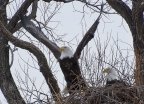
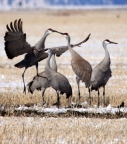
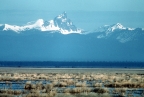
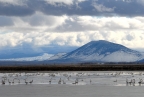
| Background: | Lower Klamath, the nation's first waterfowl refuge set aside in 1908, and Tule Lake are two of six Klamath Basin refuges. A patchwork of ponds, marshes, and farmlands shelter one to million migratory waterfowl, with huge flocks of northern pintails, American wigeons, snow geese, and cackling Canada geese, the smallest species of Canada geese. At least 170 species breed here, including American white pelicans, grebes, cinnamon teal, and threatened greater sandhill cranes. The two refuges claim the largest concentration of wintering bald eagles in the lower forty-eight states. The Refuges are separated by Sheepy Ridge, high country used by birds of prey, pronghorn and mule deer. Tule Lake shares a boundary with Lava Beds National Monument, where desert plateaus, rugged craters, and lava tubes and caves offer vastly different wildlife viewing. | ||
| The Habitat: | Tule Lake Refuge has over 8,000 acres of upland habitat within its boundaries. Upland habitat is composed of dry land grasses, sagebrush and other shrubs that dominated the area. Upland habitats are just as important as wetlands for some species such as ring-neck pheasants and sage grouse. | ||
| Wildlife and Where to Find It: | View Barrow's and common goldeneye in winter. High numbers of rough-legged hawks and northern harriers are present from November through March. Avid searchers can seek out prairie falcons year round. Spring brings breeding white-faced ibis, common and snowy egrets, western, Clark's and eared grebes and American white pelicans. Other species of interest seen on the Excellent viewing opportunities exist for many of the more than 300 bird species. From October to March, witness spectacular viewing of thousands of tundra swans, snow and Ross's geese and white-fronted geese, along with hundreds of bald eagles from December to March. Although much fewer in numbers, golden eagles can be observed year round. | ||
| Viewing Tips: | Refuges seasonally include yellow-headed and tricolored blackbird, sora and Virginia rail, American avocet, black-necked stilt, Wilson's phalarope, Forster's and Caspian tern, barn owl and California towhee. Pronghorn antelope are best seen in spring and summer. | ||
| Site Notes: | Excellent roads and auto tour routes. | ||
| Nearby Viewing Sites: | Butte Valley Basin - MacDoel Shasta Valley Wildlife Area - Montague Lewiston Lake/Trinity River Hatchery - Lewiston Packers Bay/Shasta Lake - Redding | ||
| Festivals & Events: | Winter Wings Festival - www.winterwingsfest.org | ||
| Visitor Information: | Shasta Cascade Wonderland Association - (530) 365-7500 - http://www.shastacascade.com/home | ||
| Special Tips: | For the wildlife enthusiast, a visit to the Klamath Basin Refuges at any season is a voyage of never-ending discovery. Year to year and season to season the dynamic ebb and flow of wildlife is a process of constant change. When you visit greatly determines what you will see. Click here for information on seasonal viewing opportunities. View or print a Refuge Wildlife Checklist of birds, mammals, reptiles, amphibians and fish that you might see while at our refuges, Click Here. Also, contact Discover Siskiyou - www.discoversiskiyou.com | ||
| How to Get There: | From California: Head north on Interstate 5 to Weed, CA, then northeast 45 miles on Highway 97 to the Oregon Border. Take Stateline Road (Hwy. 161) east towards Tulelake, CA to Hill Road. Turn south on Hill Road. The visitor center is located 4 miles south on Hill Road. From Oregon: Headquarters is located 20 miles south of Klamath Falls, Oregon via Hwy. 97 south to Stateline Road (Hwy 161) east towards Tulelake, CA to Hill Road. Turn south on Hill Road. The visitor center is located 4 miles south on Hill Road. Or from Hwy. 39 south from Klamath Falls to Merril Pit Road, follow the signs from there to the visitor center located on Hill Road. Please contact the refuge visitor center for more information at (530) 667-2231 | ||
| Contact Information | |||
| Managing Agency: | US Fish & Wildlife Service | ||
| Agency Site URL: | https://www.fws.gov/refuge/tule_lake | ||
| Physical Address: | 4009 Hill Road Tulelake, CA 96134 |
Agency 2: | , CA |
| Manager Phone: | |||
| Site Phone: | (530) 667-2231 | ||
| County: | Siskiyou | ||
| Addition Website: | http://www.klamathbirdingtrails.com/faqs/faqs.shtml | ||